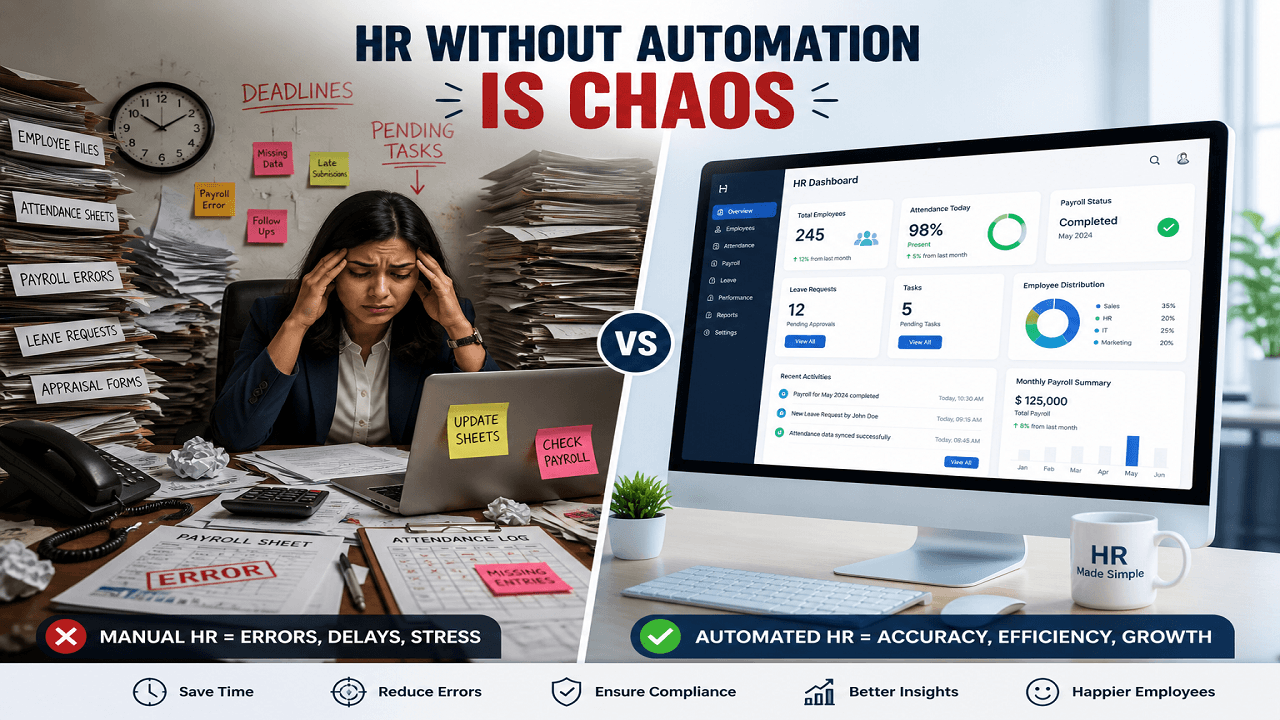
Ever show up at the office on a so-called “quiet” Monday, and before you’ve had your first cup of tea, there’s a pile of leave forms claiming all your desk space? The phone won’t stop ringing, and someone from production is convinced—loudly—that their overtime hours vanished into thin air. Welcome to another “normal” day in HR.
If you’re in HR, this won’t sound odd. Actually, it’s probably your everyday life. Most teams notice that constant firefighting means the big stuff—like actually making work better for people—just gets squeezed out by emergencies.
Here’s the thing: in many cases, these messes come down to one problem. We’re still trying to manage people with paper, spreadsheets, or whatever old system was lying around. Why do we do this to ourselves?
Let’s talk for real—what’s actually broken when you’re running HR the hard way? And, I guess the better question: What happens when you finally let go of the old manual habits and start using proper tools like HR Software in Bangladesh?
The Messy Reality: Factories and City Offices
Managing people isn’t easy even on a good day, but if you’re in Bangladesh—let’s be honest—there are some extra wrenches in the works.
Take a big garment factory in Gazipur. Tons of workers roll in for an early shift, but everyone has to sign an ancient notebook or queue up at a dodgy punch card machine. Want chaos? Wait until someone spills tea on the attendance register, or until nobody can read what’s scribbled down. Late starts, annoyed supervisors, and an HR team that spends days wrecking their backs over who really showed up.
Switch over to fancy glass offices in Dhaka—the paint is different, but the headache remains. Someone’s still chugging from desk to desk, trying to get a manager’s signature on a sick note. Or piecing together late arrivals because “the network was down.”
Most of this is silly. With no good HRIS Software in Bangladesh, HRM Software, or HR Software, everyone ends up as human calculators and photocopy machines instead of actually helping people.
Manual Attendance: So Much Harder than It Sounds
Let’s say straight up—end-of-the-month attendance checks are the stuff of nightmares. Someone always forgets to punch in. Sometimes the scanner gets stubborn about certain fingerprints, and sometimes, data disappears. In many cases, the HR team ends up watching grainy CCTV footage, hunting down people, or calling supervisors for every missing record.
The fun part? Sometimes, even after all that effort, people end up angry because their hours are still wrong. Human error is real, and trust me, no team wants to keep fighting over who was where and when.
Here’s Why AI-based Attendance Is a Lifesaver
Now, imagine you’re done with hardware headaches. That’s where an AI-based attendance system feels like magic—and trust me, once you’ve seen it, you want it.
Facial recognition works whether someone’s hands are clean, covered in engine grease, or wearing gloves. They just show up, look at the screen, and—boom—they’re inside the system. I do not want to get into how useful GPS or geo-fencing is in the field. People can start their day from a job site, a client office, or out in the wilds of Chittagong.
The whole “buddy punching” game? Gone. No more “Sorry, bhai punched in for me.” The data’s there, and it’s actually right. No fuss.
HR Software in Bangladesh that uses these kinds of AI attendance tricks isn’t a luxury at this point. It’s a lifesaver for anyone tired of chasing around after broken machines and fishy excuses.
Real-time Data: Now You See It (Actually, Right Now)
Here’s a question—why do we accept being blind for an entire month? With the old way, HR teams can’t do much until it’s time for payroll. Download the machine, import the spreadsheet, fix fifty mistakes, cry a little, repeat.
But real-time data? That’s a game-changer. As soon as someone walks in, their name, time, and status are updated instantly. So if a supervisor wants a headcount for the third floor by 9 AM, it’s just a click away. No more ringing up HR.
This speed actually matters more than you’d think. Maybe you’re short-staffed on a line—now you know, and you can do something about it immediately instead of three days too late.
HRIS Software in Bangladesh with real-time data processing means you actually, finally, keep up with your business.
Why Payroll Week Ruins Everyone’s Mood
If you’re in HR and you don’t panic a little before payroll, what’s your secret? For most HR teams—especially those with hundreds or thousands of workers—those spreadsheets are pure anxiety.
Every absent day, every bit of overtime, every sneaky festival bonus—it all needs to be calculated. Payroll Software in Bangladesh that actually works is rare, so most teams are doing things by hand, hoping and praying the numbers are right. And let’s be honest: one small slip and someone gets underpaid, and that’s a crisis nobody wants.
Frankly, nobody signs up for HR to become a math robot or to argue with angry workers who say their pay is short.
How HR and Payroll Software Rescue Your Sanity
You want the relief? Get reliable Payroll Software in Bangladesh, or even better—just a single platform that pulls all your data together. Modern HRM Software, or HRIS Software, in Bangladesh automatically connects attendance, leaves, tax, and compliance.
Suddenly, all those worries about formula errors or missing leaves disappear. What used to take the whole team a panicked week now takes only a couple of lunch breaks. I’ve seen managers almost get emotional the first time they run payroll with proper Payroll Software, and nobody comes chasing after them.
The Magic of Everything in One Place
It’s not just payroll and attendance, though. When your HR info lives in ten places—folders, emails, random USB drives—you’re always a little lost.
But when you get HR Software that puts everything together? Wow. Emergency contacts, training history, performance reviews, warning letters—it’s all a couple of clicks. Audits get less scary. Managers aren’t pestering you for paperwork. Work flows better.
If you’re tired of these problems, consider something like Jibika Plexus. I’ve seen them solve attendance headaches for factories and make things way easier for city offices, too. They really get how crazy Bangladeshi workplaces can be and actually fix the root of the issue, not just cover it up.
Good HR Software in Bangladesh isn’t just an app—it’s a lifeline. Let people register leave from their phones, put approvals in the manager’s pocket, and finally close the loop without a hundred phone calls.
Making Space for Actual “Human” Resources
You know what you get when you automate all the boring bits? Actual time—time for HR to do what matters: help people, solve problems, build a better place to work. It’s way better than swimming in files or begging for signatures.
Most teams notice their energy goes up and their mistakes go down when the repetitive stuff is off their plate. Now, HR can focus on what really changes a business—listening, coaching, bringing people together.
Don’t feel like you have to change everything overnight. Start small—pick the process that’s eating the most time (attendance? payroll? leave tracking?) and try a solution that can automate that bit. Build from there.
Really, your future self will thank you. Your HR team will too. And maybe, just maybe, Mondays will finally feel less like disaster drills.


